
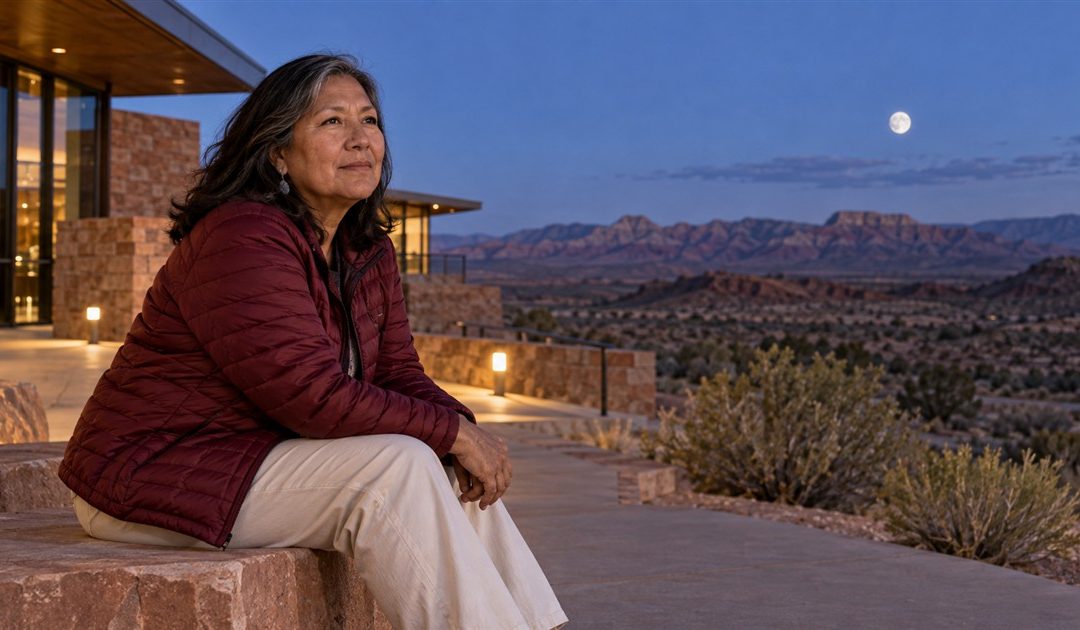
The full moon can symbolize completion, gratitude, illumination or a moment to pause. Its meaning depends on the person and tradition: a religious observance, a seasonal celebration and a private journaling practice are not the same thing. You can appreciate the Moon’s beauty without treating it as a force that must control your health, relationships or decisions.
This guide separates the astronomical event from spiritual interpretation, gives specific cultural examples and offers a simple reflection practice that does not require buying anything or taking physical risks.
Quick guide
- Astronomy: at full moon, the Moon’s Earth-facing side appears fully illuminated by sunlight.
- Symbolism: you may choose themes such as gratitude or completion; they are interpretations, not instructions from the sky.
- Culture: lunar observances have distinct histories and meanings. Name the tradition instead of combining them into one universal story.
- Practice: brief observation, a written reflection or a quiet conversation is enough.
What actually happens at a full moon?
According to NASA’s explanation of lunar phases, the Moon does not produce its own light: moonlight is sunlight reflected from its surface. As the Moon orbits Earth, our view of its illuminated portion changes. A full moon occurs when we see its sunlit face fully; the phase cycle repeats about every 29.5 days.
That is an astronomical description. Calling the full moon a time of insight, release or heightened intuition adds a symbolic interpretation. The symbolism may matter to you, but it does not follow from the phase itself that a wish will come true or a difficult situation will resolve.
Spiritual meanings you can use as reflection prompts
Instead of asking what the Moon demands, consider whether one of these themes helps you think clearly about your own circumstances.
Completion
The full disk can be a metaphor for something reaching a recognizable milestone. Ask: “What have I finished, and what still needs attention?” A milestone does not need to be dramatic. Completing a difficult conversation or keeping a small commitment can count.
Illumination
You might use brightness as a prompt to examine what is becoming clearer. Write down what you actually know, what remains uncertain and what information would help. Avoid turning an impression into certainty about another person’s motives.
Gratitude
Name something you appreciate without forcing yourself to feel positive about everything. Gratitude and disappointment can coexist. If a gratitude exercise feels artificial today, simply describe one detail you noticed in the sky or your surroundings.
Release
“Letting go” can mean changing a manageable action, such as declining an extra commitment or putting away a project you no longer want. It need not mean forgiving someone, denying grief or abandoning a necessary responsibility. Pair the metaphor with a specific choice you can review later.
Examples from distinct traditions
The United Nations’ account of Vesak describes the May full-moon observance as commemorating the Buddha’s birth, enlightenment and passing for millions of Buddhists. This religious significance should not be reduced to a generic technique for attracting personal success.
The Smithsonian’s introduction to the Moon Festival describes family and friends gathering for reunion, moon viewing, poetry and music. That offers a different example of lunar meaning: connection and celebration within a particular cultural context.
These examples do not represent every community or practice. If you want to participate in a tradition, learn from people and institutions connected with it. A self-created journal exercise should be described as your own practice, not presented as an ancient ceremony or attributed vaguely to all Indigenous peoples.
What about named full moons?
A moon name is not a forecast for your life. Seasonal names can invite curiosity about local history and the environment, but they do not establish a special power to generate money, repair relationships or change your personality.
One useful correction concerns the Harvest Moon: it is not simply another name for every October full moon. NASA defines it as the full moon nearest the autumnal equinox. In the familiar Northern Hemisphere usage, that places it near the start of northern autumn rather than assigning it permanently to one calendar month.
If you keep a moon journal, separate the name you found, the source and your personal association. For example: “Harvest Moon; a seasonal name; I am using it as a reminder to review a project.” That is more honest than saying the Moon guarantees a harvest of success.
For claims about mood, sleep and menstrual cycles, see our separate guide to moon phases and women: beliefs and evidence. It keeps those questions distinct from choosing a personal lunar ritual.
A simple, low-risk full-moon reflection
This is an optional personal exercise, not a religious ceremony or treatment. You can do it indoors, and you do not have to see the Moon for the reflection to be useful to you.
- Choose a comfortable setting. Use a window, familiar terrace or safe public viewing area. Respect opening hours, weather and your own access needs.
- Notice before interpreting. Describe the light, clouds or landscape. If you cannot see the Moon, notice the room around you instead.
- Write three brief lines. “Something I appreciate is…” “Something that needs attention is…” “One action I can choose is…”
- Make the action specific. Replace “transform my life” with a manageable step, such as arranging a conversation or setting aside time for a task.
- Close the practice. Put the notes away and continue your evening. Revisit the action when convenient rather than watching for signs all night.
For example, “release overcommitment” could become “decline one optional invitation and keep the evening free.” The value is in the choice and follow-through, not in a claim that moonlight removes your obligations.
If you prefer a non-lunar approach to paying attention, see our beginner’s guide to mindfulness. No particular phase is required to pause and notice your experience.
Crystals, moon water and healing claims
Placing a keepsake near a window can be a symbolic way to mark an intention. Do not describe the result as an object acquiring proven healing power. Moonlight is not a substitute for medical or mental health care, and feeling unwell is not a reason to wait for the next full moon before seeking help.
The reflection above does not require stones in the mouth, drinking outdoor water, adding unknown materials to a bath or burning anything. Leave those steps out. You can draw the Moon, use a photograph you already have, or simply keep a written note. There is no need to purchase a crystal or pay someone to prevent a supposed lunar consequence.
If you miss the full moon
Missing a date does not create bad luck or make you spiritually inadequate. You can reflect another evening, skip the practice or change it entirely. If ritual rules start making you fearful, give yourself permission to step away and talk with someone you trust.
Key takeaways
- The full moon is a visible phase of reflected sunlight; spiritual meaning is a separate layer of interpretation.
- Respect the distinct contexts of religious and cultural lunar observances.
- Use symbolism to ask questions, not to guarantee outcomes.
- A brief, comfortable reflection needs no special objects, ingestion or exact timing.
- Health concerns deserve appropriate care regardless of the lunar calendar.
Frequently asked questions
Why is the full moon spiritually significant?
People may connect its bright, complete-looking disk with fullness, gratitude, reflection or the completion of a cycle. Religious and cultural meanings differ; there is no single interpretation shared by everyone.
Can moonlight heal or charge crystals?
Moonlight is reflected sunlight. Treat crystal charging as a symbolic practice, not as an established medical treatment or a way to give an object proven healing powers.
What is a low-risk full-moon ritual?
From a safe place, briefly observe the Moon or its surroundings, write down something you appreciate, and choose one practical next step. No fire, ingestion, special purchase or overnight vigil is necessary.
Do I need to perform a ritual at the exact full-moon time?
Not for the optional reflection practice described here. Choose a comfortable time that fits your needs; clouds, daylight or a missed date do not make the reflection worthless.