
Feng shui is a Chinese tradition concerned with place, orientation and the relationship between people and their surroundings. A respectful introduction needs more than a list of things to tidy. This guide provides a small amount of cultural context, then clearly separates it from original, practical home changes you can consider without promises about luck or health.
Editorial correction: The earlier article treated feng shui as mindfulness, offered a wish-manifestation ritual and connected artwork, bed arrangements and household disorder with emotional or relationship outcomes. Those claims have been removed. A home does not diagnose its occupants, and changing a room does not guarantee prosperity, healing or romance.
A cultural starting point
The Metropolitan Museum of Art’s guide to its Chinese Garden Court describes fengshui as principles for placing structures and interpreting landscapes in relation to qi. Its discussion of Chinese gardens also describes yin and yang through contrasting elements, such as rough and smooth surfaces or shaded and sunlit areas. This is historical and cultural interpretation, not experimental proof of effects on fortune or health.
That context extends beyond arranging a sofa or buying an ornament. The source discusses a particular garden tradition; it is not a complete guide to every school or contemporary practice. If you want tradition-specific guidance, ask which approach, sources and training inform it.
A useful question for a practitioner is, “Which part of your recommendation belongs to the tradition you follow, and which part is your own design preference?” A clear answer helps you understand what is being offered without treating all explanations as interchangeable.
Keep three kinds of statement separate
- Traditional interpretation: A claim about qi, orientation or symbolic relationships within a named approach.
- Personal meaning: An object or arrangement matters to you because of a memory, preference or practice.
- Practical observation: A change makes a drawer easier to open or reduces glare on a particular seat.
You can value a family object without claiming it changes an energy field. You can also improve a walkway without calling that a full feng shui consultation. For broader design ideas with similar evidence boundaries, see our spiritual home-design guide.
Six practical changes to consider
The suggestions below are original household-design prompts, not traditional prescriptions or a method for measuring qi. Use only what fits your home, access needs, budget and the agreement of people who share it.
1. Make the entrance work for daily use
Notice what happens when you arrive carrying the things you normally carry. Can you open and close the door, put down a bag and reach what you need? Move a small item only if its new position is also safe and convenient.
A tray or an existing shelf might give keys a consistent place. That is an organizational choice, not an invitation that guarantees opportunities. Avoid adding a bench or basket that narrows an important route.
2. Compare seating before moving heavy furniture
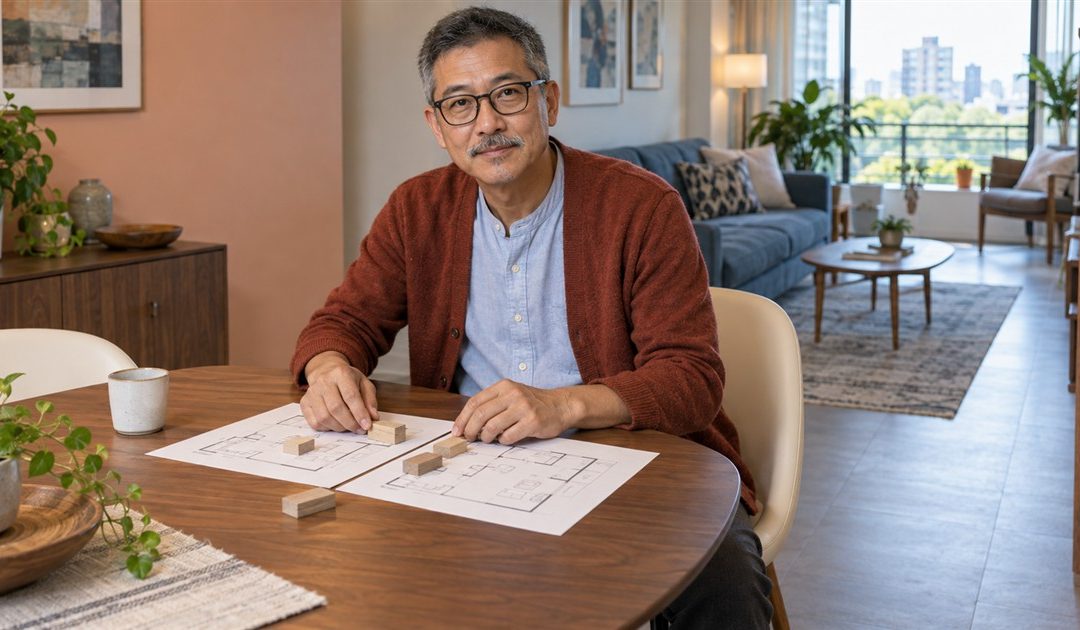
Sketch two possible arrangements on paper. Include the space needed to use doors, drawers and mobility equipment, not just the outline of the furniture. Ask the people who use the room which arrangement fits their activities.
If you like seeing the entrance from a chair, explore that preference only where it remains comfortable and safe. This article does not prescribe a universal “command position.” Do not relocate appliances or add an insecure mirror to force a particular view.
3. Adjust one source of glare
Sit where you read or work and notice whether a light reflects directly into your eyes or onto the page. An existing movable lamp or permitted blind adjustment may give you another option. Check the result in the same activity, not by whether the room looks better in a photograph.
Keep cords out of routes and use lights according to their instructions. Do not cover a hot fixture with fabric or improvise electrical work. If the problem cannot be changed safely, seek appropriate help or choose another location.
4. Choose color for your own response
Try an existing cushion, textile or small removable sample before committing to paint or a purchase. Notice it in the light in which you actually use the room. You can prefer a color without assigning it power to fix your relationships or accelerate a goal.
If a practitioner offers a traditional color interpretation, ask for its context. Do not assume a simple internet palette represents every approach. A room does not need to match somebody else’s definition of spiritual purity.
5. Make storage usable rather than symbolic
Keep frequently used items where they can be reached appropriately. Under-bed storage is not automatically a moral or energetic problem; consider the actual furniture instructions, access and cleaning needs instead. Do not discard necessary belongings solely because a chart labels them stagnant.
Only sort or remove another person’s things with their agreement. You can set aside an undecided item without forcing a sentimental decision during a decorating session. Repair, reuse or responsible disposal can be considered according to the object’s condition, not a promised reward.
6. Keep one personally meaningful feature
A photograph, book or ordinary object can mark a place you enjoy. Its meaning does not have to be universal. Choose a secure location that does not introduce a falling, trip or access hazard.
You do not need flowing water, an open flame or a new plant to complete the room. If a feature creates extra maintenance or worry, leave it out. A simpler arrangement is an option, not a higher spiritual rank.
A renter-friendly check before changing anything
Start with changes that are small and reversible. Read relevant tenancy requirements before drilling, painting or attaching fixtures. This guide is not legal advice, and “removable” products can still affect surfaces.
Safety remains important in rented homes. Do not treat reluctance to mark a wall as a reason to leave a tip-over hazard unresolved. Ask the property manager and a qualified installer about a suitable solution consistent with the furniture and wall requirements.
Leave installed appliances, ventilation equipment and safety devices alone. If a layout idea depends on changing one of these, it is no longer a simple decorating task. The original room may be the better choice.
A small before-and-after note
Use five lines to evaluate one practical change:
- Problem: What ordinary task is awkward?
- Proposed change: What small adjustment might help?
- Constraints: What must remain safe, accessible and agreed?
- Observation: What happens during normal use afterward?
- Decision: Keep, adjust or reverse the change.
In a fictional example, Wei notices a dining chair catches on a storage basket. He and his housemate agree to relocate the basket to an existing shelf that can safely hold it. They check the route and shelf access during ordinary use.
If the shelf becomes inconvenient, they try another suitable location or undo the change. An easier route is evidence about that route, not proof that qi has improved their finances. They do not need to move every item in the apartment to evaluate one problem.
Know what a room change cannot settle
A low picture, dusty corner or crowded closet cannot tell you that someone is depressed, unheard or spiritually blocked. Their circumstances may include limited space, disability, caring responsibilities or simple preferences. Ask what help is wanted instead of diagnosing the home.
If your concern is a smell, leak or other environmental problem, address the practical cause rather than covering it with a ritual. Our environmental-reset guide separates those checks from symbolic language. For an optional personal pause, the grounding guide does not require rearranging the room.
Source scope
The Met supports the limited cultural discussion. USFA and CPSC sources inform the safety priorities. The six changes, evaluation note and Wei example are original practical suggestions, not a certified feng shui consultation, building inspection or guarantee of any life outcome.
Frequently asked questions
What is feng shui?
Feng shui is a Chinese tradition concerned with the relationship between place, orientation, landscape and qi. It should not be reduced to generic decluttering. This introductory article separates cultural context from its own practical home suggestions.
Which changes work for renters?
Consider reversible changes to small belongings, comfortable seating, glare or storage, with agreement from other occupants. Follow tenancy requirements and manufacturer instructions. Do not remove necessary anchors or alter appliances to satisfy a layout idea.
Are practical benefits the same as proving qi?
No. A clearer walkway or more comfortable seat can be evaluated as a practical change. That observation does not establish that qi caused a change in health, luck or relationships.
Do I need to buy special objects?
No purchase is required for the practical suggestions here. Begin with what you already have, keep essential spending protected and decline guarantees that an object will bring wealth, romance or healing.